There is a bias in how we document model development. We write up what worked. The successful validation, the parameter set that produced a reasonable fit, the preprocessing pipeline that survived peer review. The failures mostly go unrecorded.
This is a problem, because in my experience the failures teach you more. A validation metric that looks good on one spatial scale but falls apart on another tells you something real about the structure of your model. An assumption that seemed plausible but produced nonsensical results is not a waste of time. It is a constraint: you now know that the system does not behave that way, which is genuinely useful information.
Taleb calls this via negativa: the idea that knowledge grows more reliably by subtraction than by addition. We know what is wrong with more clarity than what is right. It is easier to identify a broken assumption than to confirm a correct one.
The principle that we know what is wrong with more clarity than what is right, and that knowledge grows by subtraction. Also, it is easier to know that something is wrong than to find the fix. Actions that remove are more robust than those that add because addition may have unseen, complicated feedback loops.
Nassim Nicholas Taleb, Antifragile
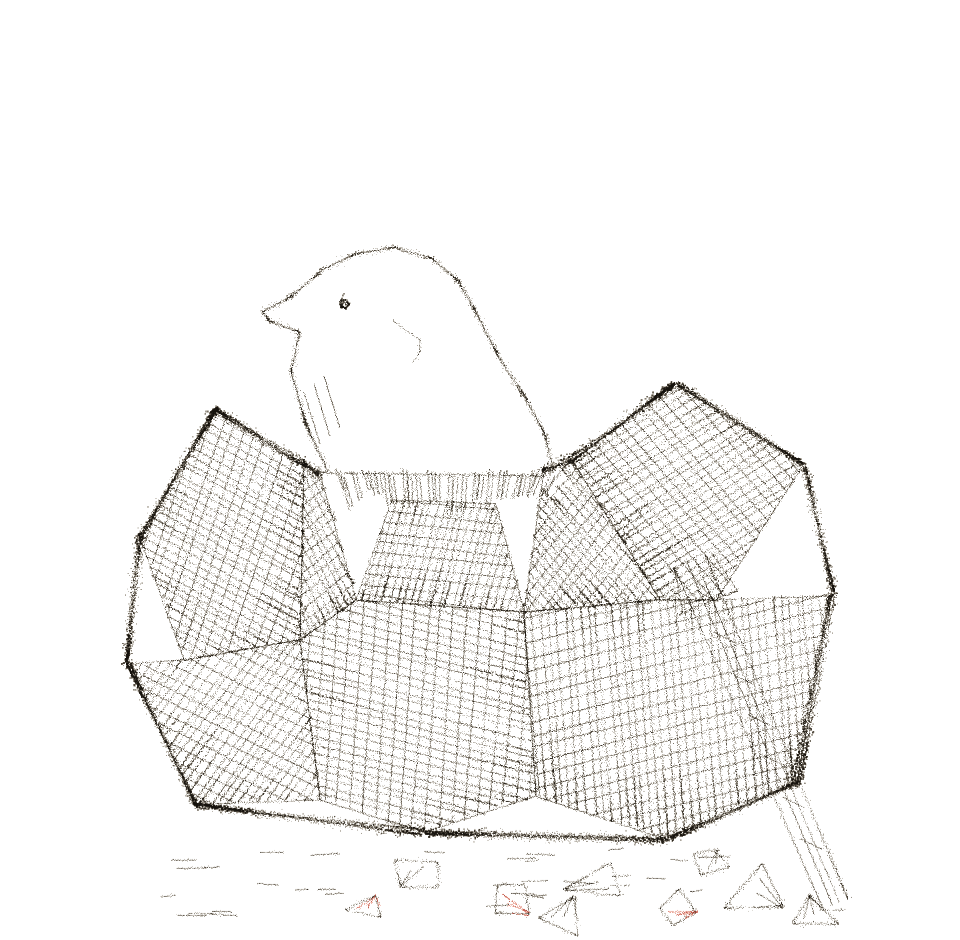
In mechanistic disease modelling, this matters concretely. Many parameters are uncertain. You test a range of plausible values, and most of them turn out to be wrong in some way. The useful output is often not the parameter set that fits best, but the region of parameter space you can confidently rule out. The same logic applies to intervention strategies: knowing which control measures are ineffective narrows the decision space for policymakers in a way that a single “optimal” recommendation does not.
The practical implication is simple: document your failures as carefully as your successes. Record the preprocessing step that introduced bias, the validation approach that gave misleading confidence, the expert assumption that did not hold up. These are not footnotes. They are findings.